

Written by Darshatta Gamage
In a world where technology is rapidly reshaping how societies operate, the concept of democracy itself is being transformed. For Sri Lanka, which has faced limitations in access, infrastructure, and a coherent national strategy for digital services for years, this transformation presents both significant opportunities and serious risks. As the new Government of Sri Lanka makes digital transformation a national priority, the concept of “digital democracy” gains importance, not just as a technological ambition, but as an essential part of democratic governance, citizen participation, and inclusive development.
In his address to the United Nations General Assembly, President Anura Kumara Dissanayake emphasised that “…ensuring that every person and every country can enjoy the opportunities of the digital age is a global challenge. If we succeed in our task, we will be able to open doors to technology, accelerate development, and strengthen governance.” This highlights how the national agenda now sees digital democracy not as a side project but as something that is central to the development. According to the report ‘Sri Lanka State of the Economy 2025’, “the pace of technological change is transforming every facet of economic activity with the potential to substantially alter a country’s development trajectory.”
The latest survey implemented by the Accountability Lab across South Asian countries identified that Sri Lanka displays emerging digital ecosystems with growing adaptations among South Asian nations.
The term ‘digital democracy’’, defined by CIVICUS as the integration of digital technologies into the processes and practices of democratic governance, thus carries promise: it can reshape how citizens interact with government, engage in civic life, hold authorities accountable and participate politically. But it also raises urgent questions: Who gets access? Who is left behind? How do we guard against abuse, manipulation and exclusion?
As of early 2025, Sri Lanka had about 12.4 million internet users, corresponding to about 53.6% of the population. Social media penetration was slightly lower at around 35.4% of the total population, or 8.2 million users in January 2025. Meanwhile, digital literacy (the ability to use digital tools such as smartphones and internet services) stood at approximately 64.3% in the first half of 2024. However, experts challenge the definition of ‘digital literacy’ used in Sri Lanka. They further point out that digital literacy levels are likely much lower among marginalized communities, particularly estate workers and rural populations, where limited access, affordability issues, and language barriers continue to restrict effective digital participation. The Digital Divide in South Asia survey by the Accountability Lab has identified that the digital literacy deficit is a profound gap in Sri Lanka. Further, its findings suggest that ‘affordability remains a significant hurdle, exacerbated by recent national economic instability limiting household purchasing power’.
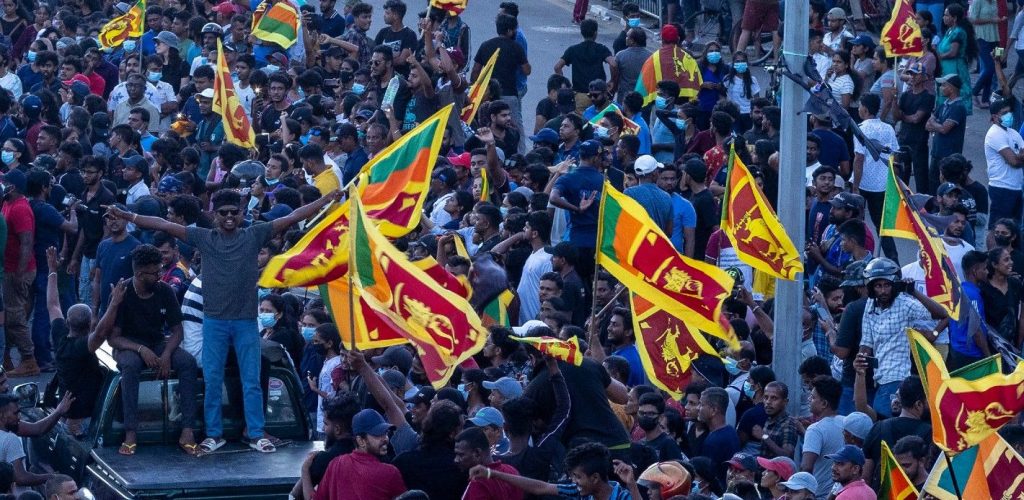
Digital engagement in Sri Lanka has also been deeply intertwined with political and social developments. During moments of national crisis, particularly the 2022 economic collapse and subsequent protests, social media platforms became powerful tools for mobilization, solidarity, and information-sharing. Citizens used these platforms to organize demonstrations, demand accountability, and exchange real-time updates. Lessons from this period underscored how digital spaces could amplify democratic voices, foster civic participation, and hold power to account. However, it also exposed vulnerabilities such as disinformation, hate speech, and state-imposed internet restrictions, revealing how fragile digital freedoms can be in times of unrest. Further, the introduction of controversial legislation such as the Online Safety Act, No.9 of 2024, as well as the misuse of laws such as the ICCPR Act, No. 56 of 2007 further poses challenges to the development of a truly democratic digital space in Sri Lanka.
Key Challenges
Sri Lanka’s path to digital democracy is shaped by a set of complex and overlapping challenges, ranging from structural inequalities and weak infrastructure to digital repression and information disorder.
Digital divide and exclusion are one of the key challenges. Despite progress in connectivity, access to digital tools and reliable internet remains uneven across geography, gender, and socioeconomic status. Many communities in rural and estate areas face frequent power outages, unstable connections, and the high cost of devices and data plans. These limitations exclude large portions of the population from meaningful digital participation. Women, in particular, face cultural and economic barriers that limit their use of technology. Without targeted interventions, digital democracy risks reinforcing existing inequalities rather than bridging them.
The second challenge is digital authoritarianism and censorship. The same digital tools that enable participation can also be used for surveillance and control. The government’s record of temporarily blocking social media platforms during times of crisis highlights how digital infrastructure can be weaponized to suppress dissent. The Online Safety Act, enacted in 2024, grants significant discretionary powers to authorities. Such mechanisms, without adequate checks and balances, can undermine free expression and public trust. A democratic digital space must protect citizens’ rights, not monitor or penalize them for political opinions.
Another key challenge is the spread of falsehood through digital platforms and underlying polarization influencing political and social life in Sri Lanka. The explosion of online content has made Sri Lanka vulnerable to false information and manipulated narratives, particularly during elections or protests. Social media algorithms often amplify sensational or divisive content, sidelining marginalized voices and fuelling polarization. Online harassment, especially against women, ethnic and gender minorities and activists, creates a chilling effect, silencing critical participation and reinforcing digital exclusion. Combating these issues requires coordinated efforts between government, civil society, and technology companies, alongside robust media and digital literacy initiatives.
Finally, Sri Lanka suffers from a lack of holistic and inclusive research and institutional frameworks. Many policy models are borrowed from the West and do not account for local cultural, linguistic, or political realities. The country’s legal frameworks for data protection, digital rights, and cybersecurity are evolving but still fragmented. For example, while the Personal Data Protection Act (No. 9 of 2022) is a positive step, its full implementation remains pending. Further, the blueprint for the digital transformation of the country requires a complete relook at the existing legal and institutional frameworks to ensure a successful and democratic transformation. The Digital Divide Survey in South Asia has identified that ‘perceptions of safety and trust’ are critically low in Sri Lanka. Thus, trust boiling shall be a key priority for Sri Lanka in its efforts towards a successful digital transformation. It is clear that without local research, grounded policy, and institutional coordination, Sri Lanka’s digital democracy will remain a patchwork of initiatives rather than a cohesive system.
The analysis on Digital Divide in South Asia by Accountability Lab further iterates that Sri Lanka cannot realize the promised economic benefits of digitization without addressing the fundamental lack of skills and establishing robust, rights-respecting legal safeguards against the arbitrary application of censorship laws
Opportunities Ahead
Despite these challenges, digital democracy holds immense potential to reshape Sri Lanka’s governance, civic engagement, and development trajectory. Properly harnessed, it can strengthen accountability, improve service delivery, and empower citizens to participate more directly in decision-making processes.
Digital tools can provide new channels for public consultation, participatory budgeting, and open data initiatives. By integrating citizen feedback into online platforms, governments can make public institutions more transparent and responsive. Digital engagement can also reduce barriers for youth, women, and rural communities, allowing them to voice concerns and contribute to governance and the economy from wherever they are.
Further, digital transformation can strengthen governance and public service delivery. Digitizing government services such as licensing, business registration, and welfare programs reduces bureaucratic delays and opportunities for corruption. Real-time data collection and analysis can improve policy decisions and allow quicker responses to public needs. Secure digital identities and interoperable platforms can make social services more inclusive, ensuring that no citizen is left behind. Further attention must be paid on strengthening systems that protect democracy, such as electoral mechanisms, judiciary processes and education with digital transformation. Digital Public Infrastructure enabled through low bandwidth, user friendly interfaces, trilingual facilities and assistive features alone can be a game changer in Sri Lanka.
Finally, Sri Lanka can capitalize on its youthful population. Young people, who have the highest levels of digital literacy, represent a powerful resource for innovation.
Empowering them through civic tech initiatives, digital entrepreneurship, and online civic engagement can transform them from passive consumers to active digital citizens.
Collaboration with the private sector and international partners can provide the necessary technical expertise and funding to scale these innovations.
A Critical Window for Digital Democracy
To realize these opportunities, Sri Lanka must act on several fronts. Expanding digital literacy and inclusion programs for underserved groups is essential. Legal frameworks must be reformed to strengthen digital rights and ensure freedom of expression and privacy. Civil society organizations, which play a critical role in promoting transparency and accountability, should be supported through funding, training, and technical resources. Furthermore, combating misinformation requires public education campaigns, partnerships with fact-checking organizations, and clear accountability standards for social media companies. Finally, regional cooperation among South Asian countries and others in the global majority can help address transnational issues such as cyber threats, disinformation, and surveillance through shared governance norms.
Digital democracy offers Sri Lanka a path toward more transparent governance, empowered citizens, and inclusive development. Yet, it also warns of the perils of inequality, repression, and misinformation if left unchecked. Success will depend on how effectively the country balances technology with rights, innovation with inclusion, and speed with deliberation. A truly digital democracy is not measured by how connected a nation is but by how empowered its people are to participate freely, safely, and meaningfully in shaping their collective future.